RISE R-01
Know when it peaks.
A small camera for your sourdough starter. It watches the jar and tells your phone at the rise you set.
Concept study · Rendered, not built
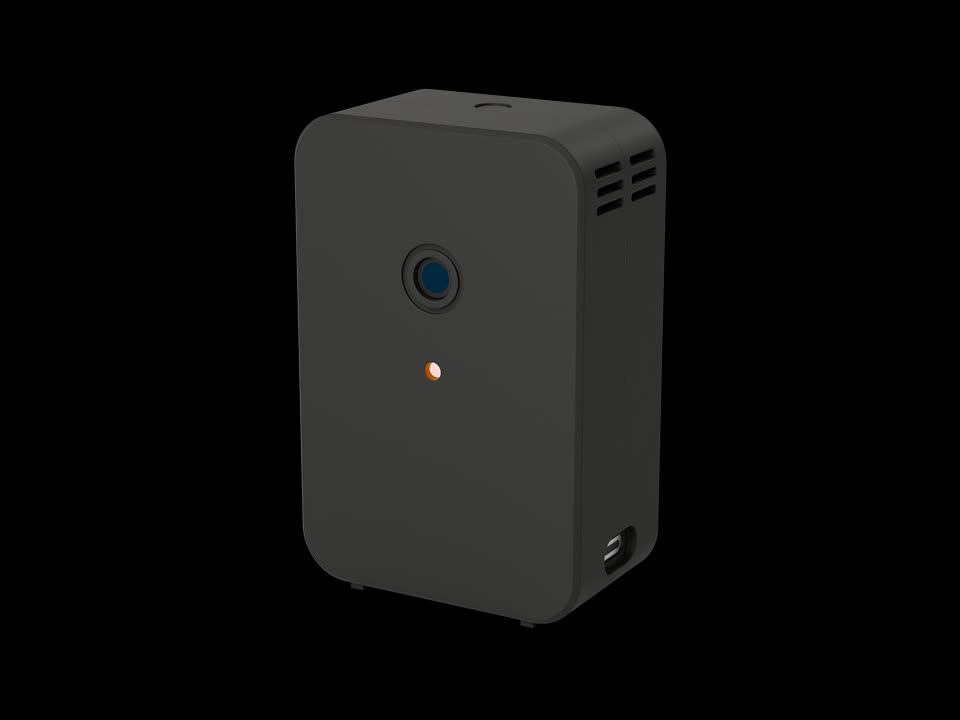
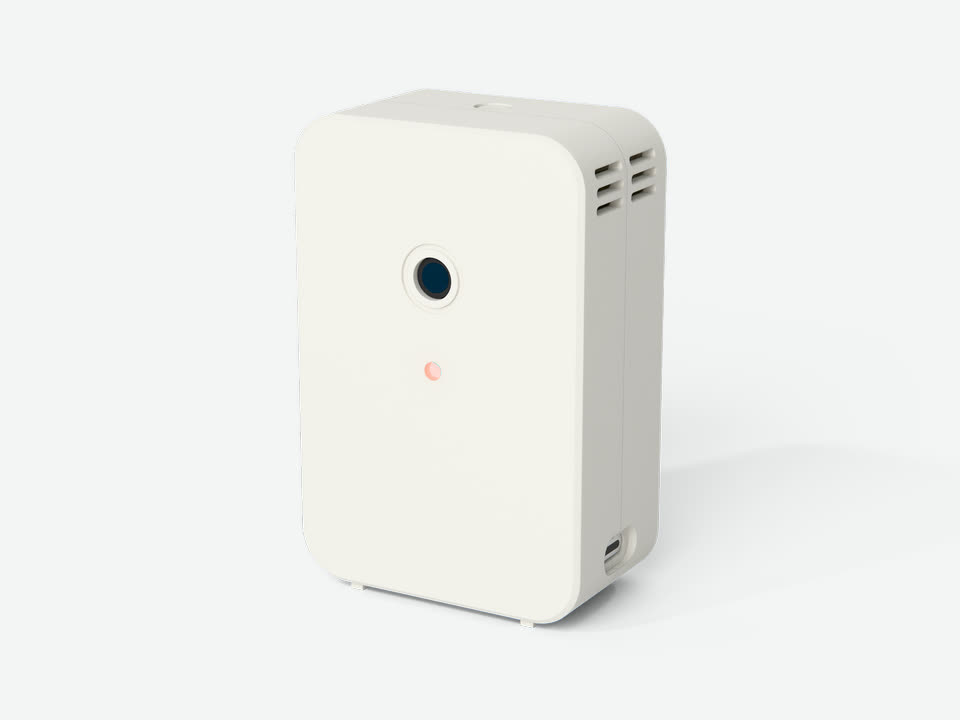
Feed it. Mark the line. Walk away.
R-01 photographs the jar through the glass every 30 to 60 seconds. Your phone finds the top of the starter in each frame, draws the rise curve, and taps you on the shoulder when it reaches your target.
Design
Small enough to forget.
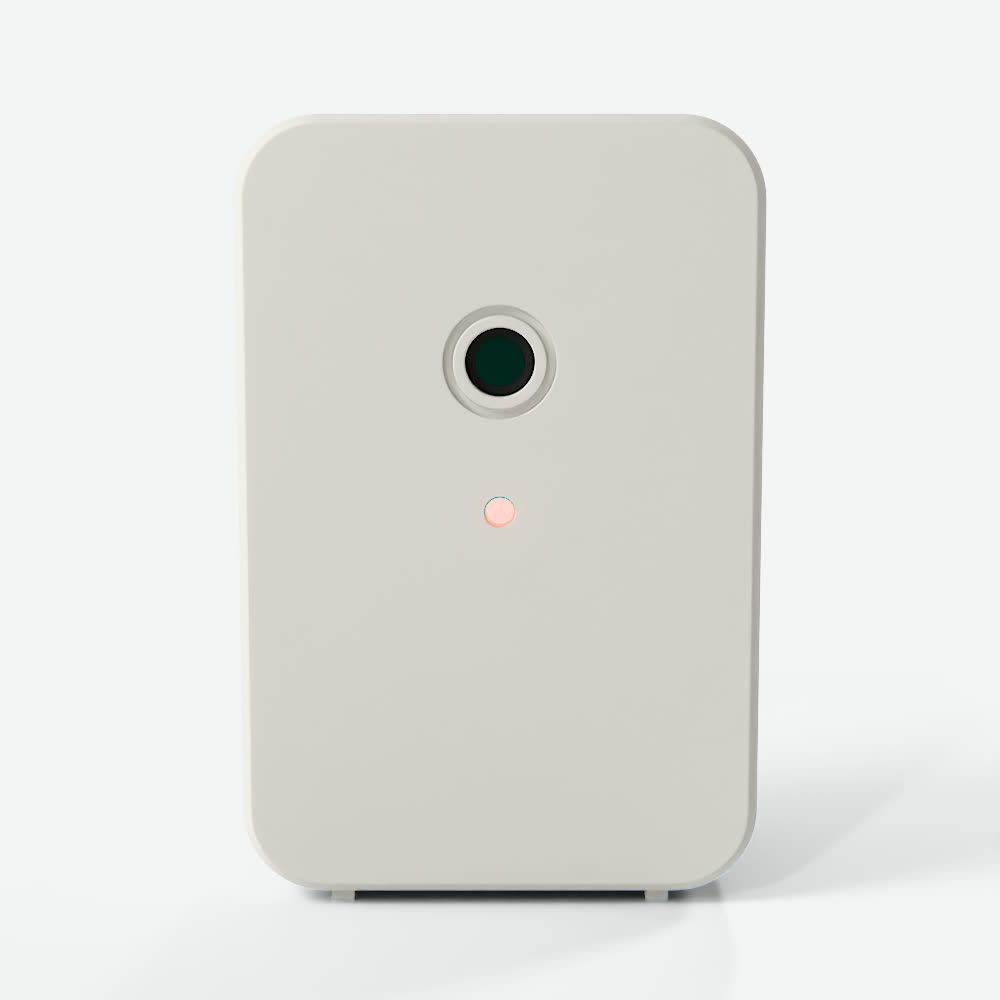
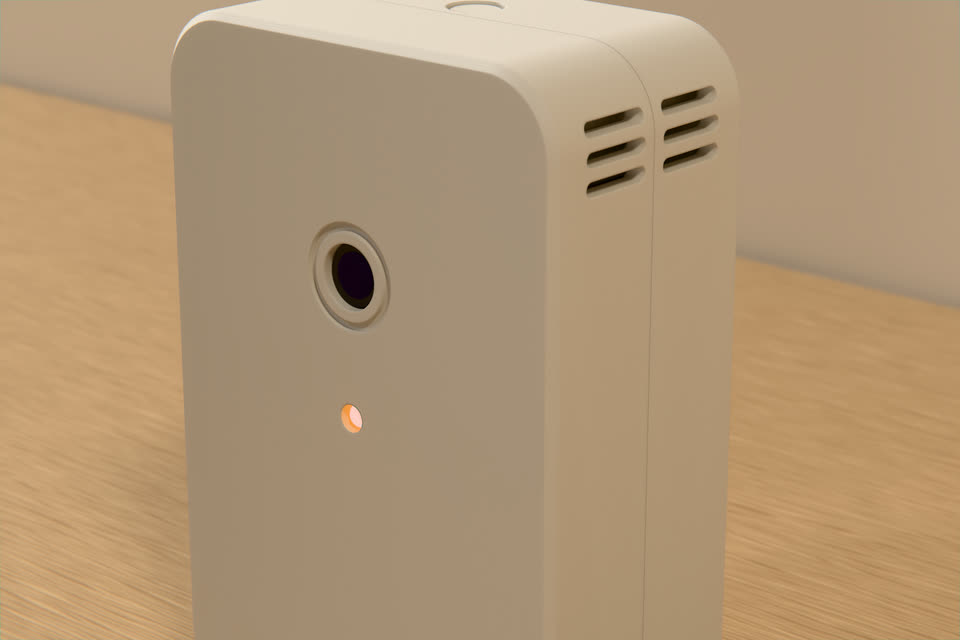
- One eye, on centre. The lens sits on the centreline, 58 mm up: the middle of a doubled starter.
- Breathes from below. Low slots feed the air sensor’s own pocket, below every heat source.
- Four screws, one flush button. Nothing glued, nothing sticking up.
- USB-C, and a vent up high. Charge from the side; warm air leaves at the top.
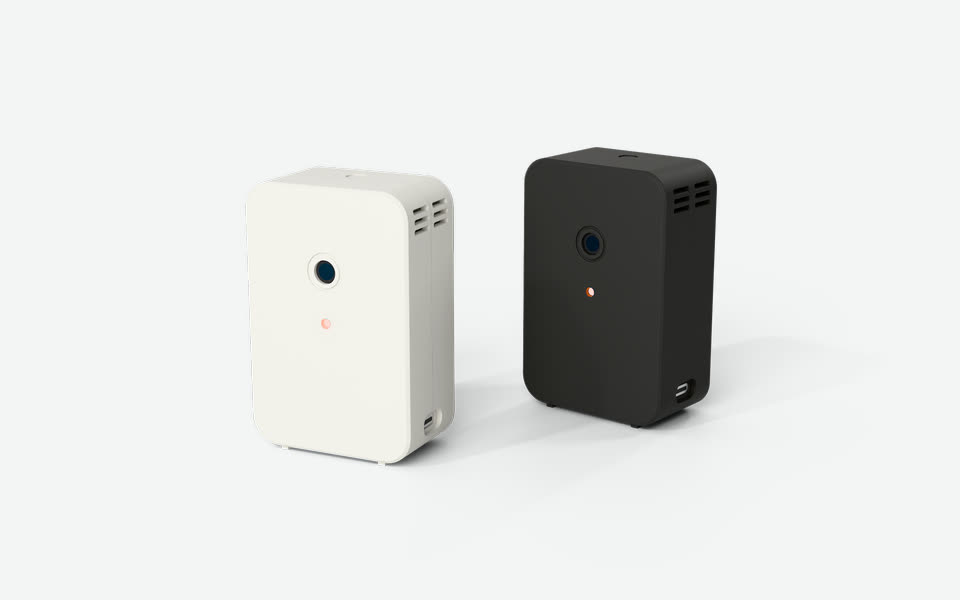
- 56 × 32 × 84 mm. About a deck of cards, standing up. Printed in one white PLA.
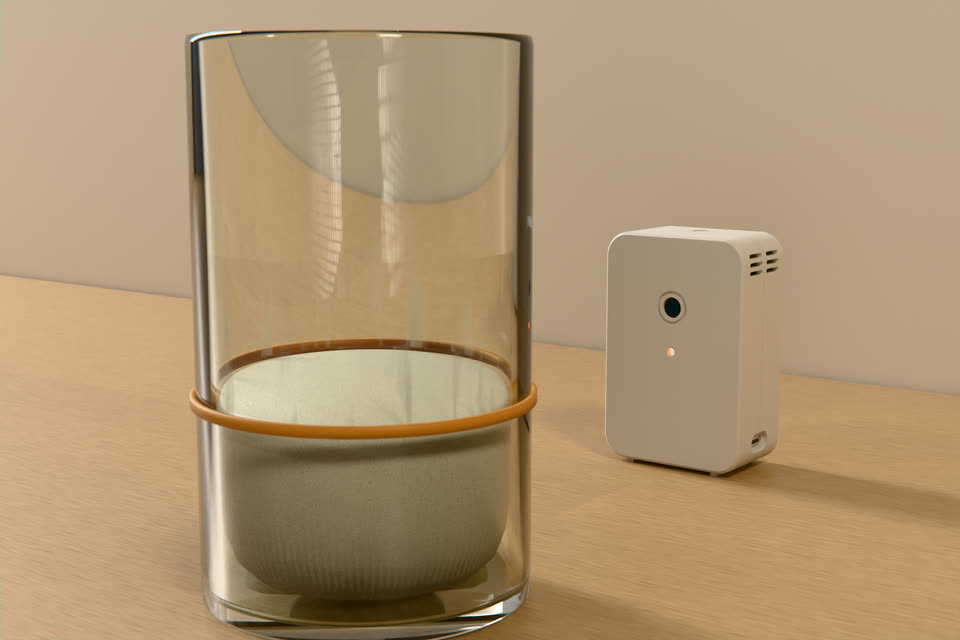
Set it beside the jar.
Any clear, straight-sided jar, about 12 cm from the lens. Mark the bottom and the starting line once in the app. Rendered scene.
How it works
Watch. Measure. Alert.
- 01
Watch
The OV2640 camera photographs the jar through the glass every 30–60 s.
- 02
Measure
Your phone finds the starter’s top edge and turns it into rise from your baseline. An SHTC3 reads room temperature and humidity.
- 03
Alert
Frames travel over local Wi-Fi to the app, with no cloud. Set 2×, or any target, and get a notification when it gets there.
Inside
Everything, in its place.
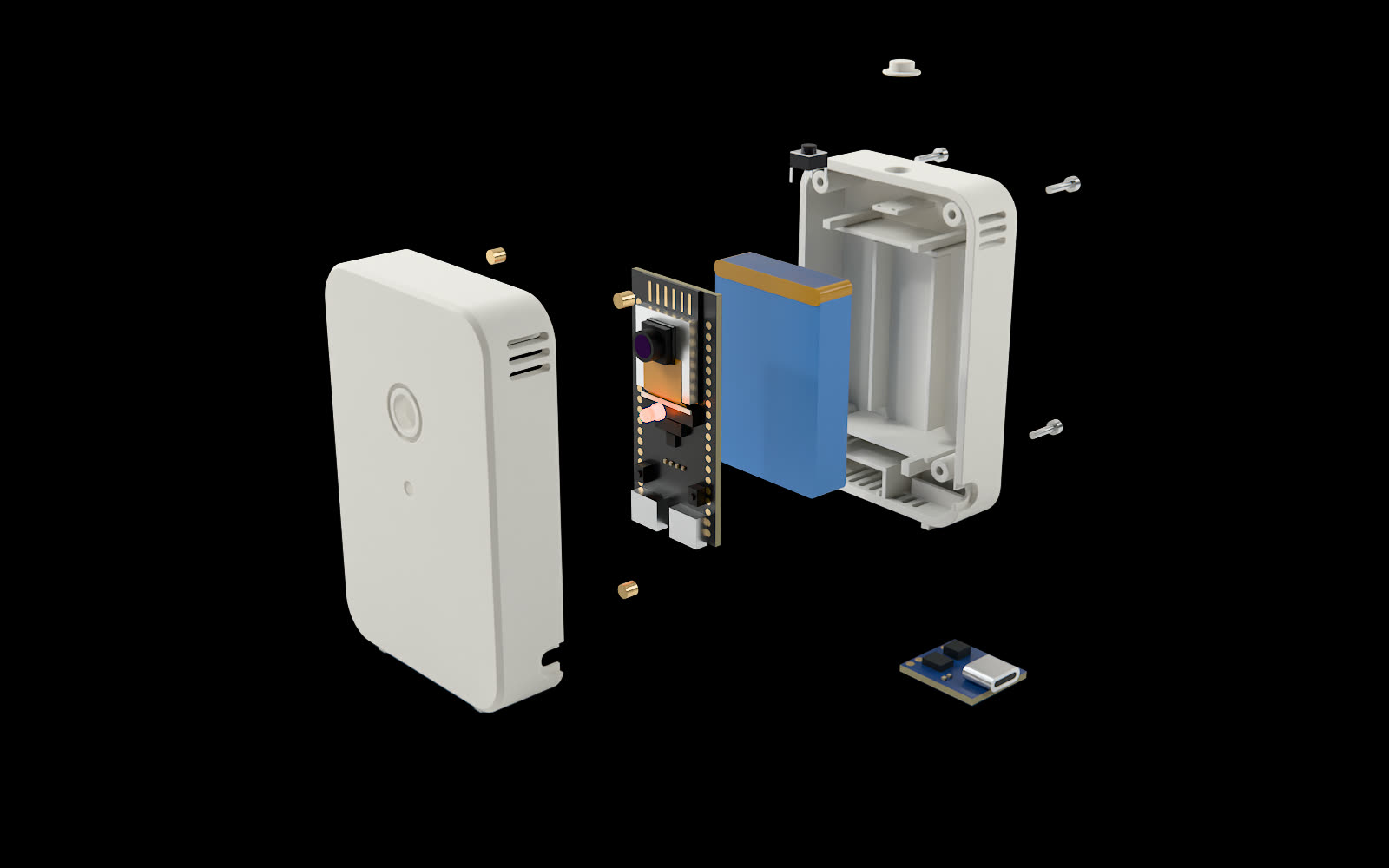
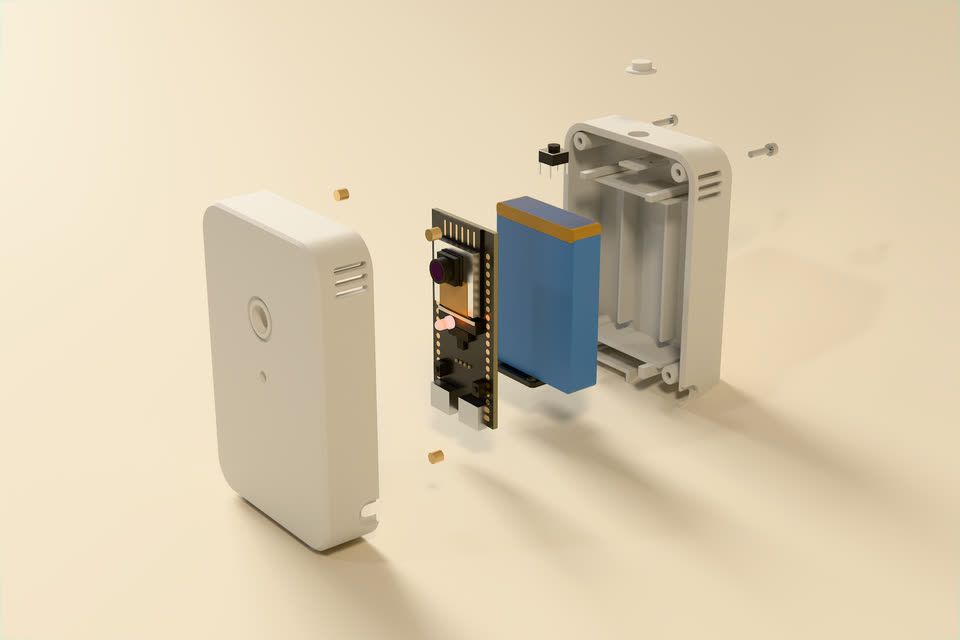
- Two printed trays. Split down the middle, each printed on its broad face. No supports.
- Freenove ESP32-S3 + OV2640. Wi-Fi, PSRAM and the camera on one off-the-shelf board, held on centre behind the eye.
- 2,000 mAh cell. Stacked directly behind the board. Eight hours unplugged is the target, not yet measured.
- USB-C charge module + SHTC3. Charger low on the right; the air sensor in its own walled pocket, low on the left.
- Four M2 screws. Through the rear tray into brass heat-set inserts. Nothing glued.
Airflow
Honest air.
A warm box reads warm. The charge module alone can shed about 1.3 W while charging, enough to lift the inside 6–7 °C and skew humidity by a third.
So the SHTC3 lives below every heat source, walled off in its own pocket, fed through slots in the base and the left side. The rest of the case breathes as a chimney: in under the charger, out high on the right.
Estimates, not measurements. The prototype has to show the offset against a reference thermometer, plugged in and unplugged.
Made to print
Three parts. One spool.
Front tray, rear tray and button cap, sized for a stock Ender-2 Pro. Every internal feature runs along the print direction, so nothing needs support.
- 3printed parts
- 0supports
- 4M2 screws, brass inserts
- 24°tip angle, est.
Tech specs
What it is meant to be.
Every line carries its status. None is validated yet.
- Targeta requirement, not measured
- Proposeda chosen part or method, not built
- Modeledexists in CAD, not printed
- Size
- 56 × 32 × 84 mm, plus 1.5 mm printed rails underneath Modeled
- Enclosure
- White PLA front tray, rear tray and flush button cap; four M2 × 8 screws into heat-set inserts Modeled
- Camera
- OV2640 on the Freenove ESP32-S3-WROOM CAM board; lens on the centreline, 58 mm up, about 119 mm from a 90 mm jar Proposed
- Capture
- One JPEG every 30–60 s over local Wi-Fi; no cloud service Proposed
- Air sensor
- Sensirion SHTC3 module in a walled, vented pocket below the electronics Proposed
- Inference
- Starter-edge segmentation in the phone app, not on the device Proposed
- Battery
- 2,000 mAh 1-cell LiPo, PH2.0 lead; at least 8 h unplugged Target
- Power
- USB-C, 5 V only, through a 5 V 1 A charge/discharge module; runs plugged in Proposed
- Controls
- One flush button over a 6 × 6 mm switch; one 3 mm orange status light Proposed
- Printer
- Stock Ender-2 Pro, 165 × 165 × 180 mm, 0.4 mm nozzle; no supports Modeled
Status
What we don’t know yet.
Nothing is built. These are the questions the first prototype has to answer.
Can the camera read the jar?
Residue, condensation and kitchen light may hide the starter’s edge.
Is the phone model good enough?
Trained on fermentation videos, then device footage; target error within 5% of fill height.
Eight hours unplugged?
Average current with capture and Wi-Fi is unmeasured.
Does the alert arrive?
Locked, backgrounded and offline phones behave differently; iOS may need more than local Wi-Fi.
How honest is the air reading?
The pocket is designed to read room air; the offset is untested.
Do the bought parts match?
The cell and sensor module sizes are modelled from listings, not measured.
Waitlist
Be first to print one.
One email when the tested files and parts list are ready.
Downloads
Working files.
- Product requirementsHybrid PRD with open decisions · HTML · 45 KB
- Front trayConcept STL, unprinted · 219 KB
- Rear trayConcept STL, unprinted · 212 KB
- Button capConcept STL, unprinted · 18 KB
- Engineering setRev C power and signal sheets · PDF · 436 KB
- Concept briefThe idea, the build and the checks · PDF · 49 KB
- First-print notesEnder-2 Pro settings · TXT · 3 KB
The STLs are untested concept files: the cell and sensor dimensions are not yet measured, so print fit coupons first. The engineering sheets are Rev C references and predate this enclosure.